The Impact of Basketball Club Teams San Diego on Youth Athletics
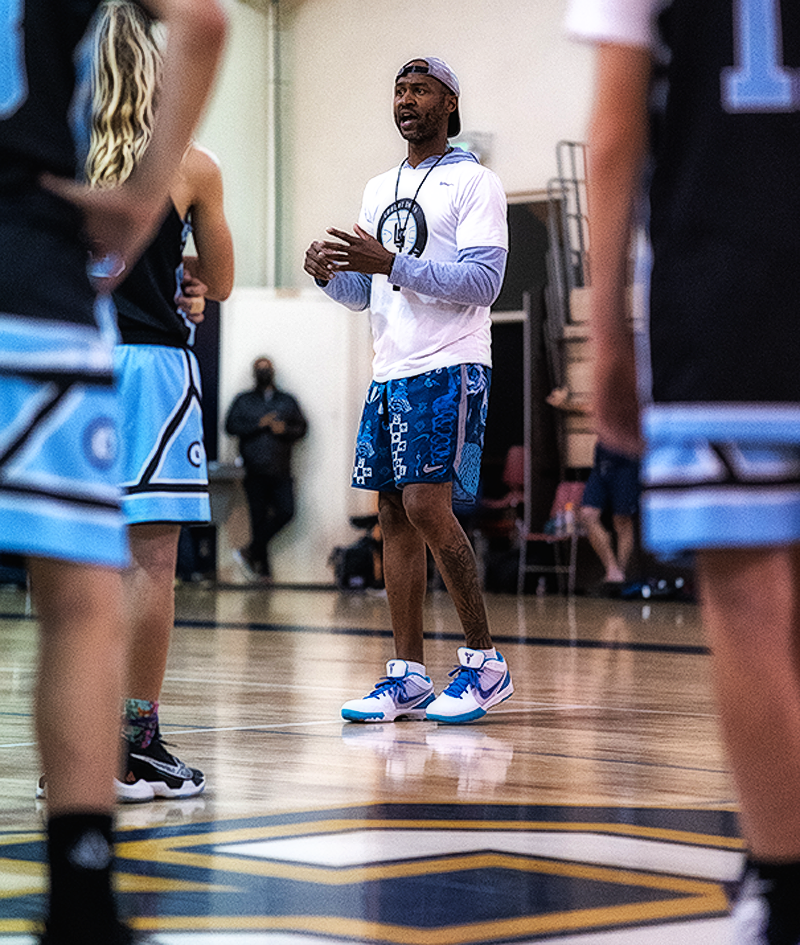
Youth sports in Southern California have changed dramatically over the past two decades, and few shifts have been as influential as the rise of competitive club basketball. In San Diego, that change has been especially visible. School teams still matter, park leagues still introduce kids to the game, and recreational programs still play an essential role. But if you want to understand where many young athletes sharpen their skills, build their identities, and test themselves against top competition, you have to look closely at Basketball Club Teams San Diego.
These programs have become more than a place to play extra games on weekends. They sit at the intersection of player development, family investment, coaching philosophy, and community opportunity. They can lift an athlete's confidence and expand a player's future. They can also create pressure, strain family schedules, and expose the uneven realities of access in youth sports. Their impact is not simple, which is exactly why it deserves a serious look.
A different model from traditional youth sports
Club basketball operates on a different rhythm than school-based athletics. A school season has a clear start and finish, a stable roster, and an identity built around the campus. Club teams, by contrast, often run across much of the year. They train in cycles, travel for tournaments, and assemble talent from multiple neighborhoods, schools, and age groups.
That structure changes what the sport means for young athletes. A player is no longer limited to the level of competition available at a single school or local rec center. A seventh grader in North County, a freshman from Chula Vista, and a point guard from central San Diego may all end up wearing the same club jersey, practicing together several nights a week, and facing teams from Orange County, Los Angeles, Arizona, or beyond.
That matters because development in basketball is heavily shaped by repetition against quality opposition. A player who dominates casual games often discovers, quickly, that high-level club basketball punishes loose ball handling, poor closeouts, weak footwork, and inconsistent decision-making. For many athletes, that first shock is useful. It replaces vague confidence with measurable standards.
In practical terms, club basketball gives coaches more time to teach and players more time to apply what they learn. A school coach might be constrained by district rules, gym access, or a compressed season. A club program can often devote more attention to skill work, positional training, and game film. When the coaching is strong, the results show up in a player's pace, timing, and understanding of how the game actually works.
Why San Diego is such fertile ground for club basketball
San Diego is particularly well suited for club growth. The region has a large youth population, a year-round sports culture, and enough basketball interest to support multiple levels of competition. Families here are accustomed to travel sports, whether that means baseball, soccer, volleyball, or swimming. Basketball fits naturally into that environment.
Geography helps too. San Diego sits within driving range of some of the strongest basketball markets in the western United States. Tournaments in Anaheim, Riverside, Las Vegas, and Phoenix are realistic options for weekend competition. That proximity gives local teams exposure to broader talent pools without requiring constant flights or extreme logistical complexity.
The diversity of the county also shapes the player base. Different neighborhoods bring different basketball traditions, athletic backgrounds, and developmental needs. Some players come from homes where basketball is already central to family life. Others arrive through school PE, a local YMCA, or a friend's invitation. Club teams become a point of convergence. That mix often raises the level of competition within practices because athletes bring different instincts, strengths, and ways of seeing the floor.
For coaches, San Diego presents both opportunity and challenge. There is enough talent to build strong teams, but talent is spread out. It takes deliberate recruiting, trusted relationships, and often a reputation built over years to attract and retain players. Parents talk. Athletes compare experiences. Programs that offer substance, not just branding, tend to endure.
Player development gets more precise
The strongest argument in favor of Basketball Club Teams San Diego is simple: they often accelerate development.
That acceleration is not magic. It comes from volume, accountability, and context. Players get more organized practices, more meaningful possessions, and more feedback. A good club environment teaches a young athlete how to train, not just how to play.
Consider the difference between a recreational player who touches the ball sporadically and a club guard who spends months working on pace dribbles, reading help defense, changing angles off ball screens, and making weak-side skip passes under pressure. The second athlete is not just getting exercise. That player is learning how to solve basketball problems in real time.
The same is true for post players and wings. Club settings can expose bigs to proper rim-running habits, rebounding angles, screen timing, and passing reads from the high post. Wings learn how to attack https://anotepad.com/notes/7qda7cpb closeouts, defend in space, and move without the ball. These are not glamorous skills on social media highlight reels, but they are the details that separate promising athletes from reliable contributors.
The athletes who improve the most are not always the early stars. In my experience, late bloomers often benefit tremendously from club basketball because they are finally placed in a gym where attention to detail is normal. A lanky eighth grader who cannot yet score much may still learn how to defend, sprint the floor, and make simple passing decisions. Six months later, with physical growth and better confidence, that player can look like a different prospect altogether.
There is also a mental component that should not be underestimated. Serious club play teaches young athletes how to absorb instruction without falling apart. It shows them that mistakes are survivable if effort and learning remain consistent. It teaches recovery after a bad quarter, a poor shooting night, or a turnover in a close game. For teenagers, those lessons can spill into school, relationships, and self-discipline.
Exposure to stronger competition changes expectations
One of the most important effects of club basketball is that it recalibrates what athletes think is normal.
A player might be the best scorer in a local middle school league and still struggle to create space against elite perimeter defenders in a club tournament. That experience can bruise the ego, but it also clarifies the work ahead. Young athletes stop measuring themselves only by points scored and start noticing defensive positioning, communication, transition effort, and shot selection.
This is especially valuable in a region like San Diego, where basketball ability can vary widely from gym to gym. Club tournaments flatten those illusions. A family can watch three games in one day and see exactly where their player stands relative to peers from stronger basketball areas. Sometimes that is encouraging. Sometimes it is sobering. Either way, it is real.
The best coaches use this reality productively. They do not sell fantasies after one hot weekend, and they do not crush a player's confidence after a rough tournament. They frame competition as information. If a guard struggles to handle pressure from longer, quicker defenders, that tells you what to train. If a forward cannot finish through contact, that points to strength, footwork, or balance. The game reveals what the player needs.
That honesty is one reason club basketball can be so influential. It strips away some of the noise around youth sports and forces athletes to confront performance in a more objective setting.
The effect on school basketball programs
Club basketball does not replace school basketball. The relationship is more complicated than that. In many cases, club teams have strengthened school programs by sending back players who are more skilled, more experienced, and more comfortable in competitive situations.
High school coaches often benefit when athletes arrive after an offseason or middle school period filled with quality reps. Players who have been exposed to advanced spacing concepts, aggressive defensive schemes, and tournament pressure tend to adapt more quickly to varsity-level expectations. They understand the value of film, communication, and role acceptance sooner than players who have only known informal basketball.
At the same time, tensions can emerge. A school coach may want rest and reset after the season, while a club team wants spring and summer availability. Philosophical differences are common. One coach may prioritize player freedom, another structure. One may see a kid as a lead guard, another as a wing defender. Families can feel pulled between competing visions.
When handled well, these systems complement each other. The school season provides identity, local pride, and a chance to compete for something rooted in community. Club basketball provides repetition, higher-volume development, and broader exposure. The athlete benefits most when adults communicate clearly and keep the player's long-term growth at the center.
Social growth often gets overlooked
The conversation around youth athletics often focuses on skill, scholarships, and rankings. Those topics matter, but they can overshadow another major effect of club basketball: social development.
A well-run team teaches young athletes how to function inside a group that did not form naturally. These are not always classmates or neighborhood friends. They are peers brought together by shared ability and ambition. That environment asks kids to cooperate across school boundaries, personality differences, and sometimes socioeconomic gaps.
Travel itself can be part of the education. Long car rides, tournament downtime, shared meals, early warmups, and the emotional swings of competition create a kind of accelerated social learning. Players discover who stays positive, who shuts down after mistakes, who listens, who complains, who leads quietly, and who needs support. Coaches who pay attention can use those moments to teach maturity.
I have seen shy players become vocal defenders because a team needed their voice. I have seen naturally talented scorers learn humility when they joined a roster full of equal or better players. I have also seen kids carry friendships from club basketball into high school and beyond, friendships built less on convenience than on shared effort.
That said, social growth depends heavily on the adults in charge. If a program tolerates favoritism, ego, or parental interference, team culture can sour quickly. The benefits are real, but they are not automatic.
The pressure side of the equation
For all the upside, club basketball has introduced a level of seriousness into youth sports that deserves scrutiny. Not every child needs year-round competition. Not every family should feel that club participation is the only path to improvement. And not every program deserves the trust that parents place in it.
The pressure can start early. Some children barely enter upper elementary school before families begin hearing about elite teams, rankings, and future opportunities. That environment can distort priorities. Instead of asking whether a child loves the game, adults sometimes rush to ask whether the child is "on track."
This is where judgment matters. A ten-year-old does not need to live like a college recruit. A thirteen-year-old who plays multiple sports is not behind. Burnout in basketball is real, and so is overuse. Knees, ankles, lower backs, and growing bodies need rest. So do minds.
There is also the emotional toll of selective team culture. Club sports can sharpen identity, but they can also turn every roster decision into a referendum on self-worth if adults are careless. Being moved down a level or receiving fewer minutes can be painful. Sometimes it is appropriate and instructive. Sometimes it reflects poor communication or inflated promises. Families need to distinguish between healthy challenge and chronic chaos.
Cost and access shape who gets to participate
Any honest discussion of Basketball Club Teams San Diego has to confront money.
Club basketball can be expensive. Fees vary widely by program, age group, schedule, and travel level, but families may face costs for dues, uniforms, tournament entry, private training, transportation, hotel stays, meals, and shoes. Even when a team is reasonably priced compared with national programs, the total annual commitment can still be significant.
That creates access issues. Talented athletes from lower-income households may struggle to stay involved unless programs offer scholarships, fundraising help, or flexible payment structures. Some clubs do this well. Others market opportunity while quietly filtering for families who can absorb the full cost without strain.
The result is a mixed landscape. Club basketball can be a ladder for mobility, discipline, and confidence, but it can also mirror broader inequality. The athletes with the most resources often receive the most reps, the best travel access, and the strongest visibility. Talent alone does not always determine who gets seen.
Programs that take community development seriously try to close that gap. They partner with local gyms, keep some teams affordable, or reserve assistance for families in need. Coaches who have worked in public school settings often understand this issue viscerally because they know exactly how many capable players disappear from the pipeline for financial reasons rather than basketball reasons.
What parents should actually look for
Parents are often dazzled by branding. Names, social media clips, uniforms, and tournament schedules can make a program look more polished than it really is. What matters more is less flashy: coaching quality, player development habits, communication, and whether the environment is stable.
A good club team usually reveals itself in ordinary moments. Watch a practice, not just a game. Listen to the coaching points. Are corrections specific, or just loud? Are all players being taught, or only the top few? Is the gym organized? Do players know where to be? Is the pace demanding but purposeful?
Families should also pay attention to how the staff talks about goals. A trustworthy program can describe development honestly. It will not imply that every player is headed for a scholarship or a top college pathway. It will explain how roles are earned, how minutes are handled, and what is expected outside tournaments.
Here are a few signs that a club environment is healthy:
- Coaches teach details consistently, not only during games.
- Communication with families is clear and timely.
- Playing time expectations are addressed honestly.
- Skill development remains central, even for bench players.
- The team culture values effort, accountability, and respect.
That checklist sounds simple, but it eliminates a surprising number of weak programs.
The college pipeline, and the myths around it
One reason families pursue club basketball is exposure. That reason is valid, but it is often misunderstood.
For athletes with legitimate college potential, club basketball can provide important visibility, especially during the high school years. College coaches and evaluators often rely on tournament settings because they allow efficient comparison across many prospects. A player competing in the right events, against strong opponents, with reliable film, has a clearer chance to be evaluated than one who only appears in scattered school games.
But exposure without ability solves nothing. If a player is not ready, more eyeballs do not help. In fact, they can create false hope. The real value of club basketball is usually development first, exposure second. The sequence matters.
Most youth athletes will not play college basketball, and that is not a failure. The game can still shape work ethic, friendships, physical fitness, and confidence in lasting ways. Programs that speak honestly about this tend to build healthier expectations. They understand that success is not measured only by scholarships. Sometimes success is a young person learning how to commit, compete, and carry responsibility.
Where club basketball helps youth athletics most
When club basketball is at its best, it raises standards across the whole ecosystem. It pushes athletes to train more intelligently. It challenges coaches to improve. It gives school programs better-prepared players. It creates communities around the game that cross neighborhoods and backgrounds.
Its strongest contribution may be that it turns basketball from an occasional activity into a craft. Kids begin to understand that improvement is built. Footwork can be sharpened. Shooting mechanics can change. Defensive habits can become instinctive. Confidence can be earned through repetition rather than empty praise.
That lesson extends beyond sport. Young athletes who learn to embrace instruction, tolerate setbacks, and chase gradual improvement carry those habits elsewhere. Teachers often notice it. Parents notice it. Eventually employers do too.
San Diego's basketball landscape is better because serious club programs exist. It is also more demanding, more commercial, and more uneven. Both truths can live side by side. The challenge for families, coaches, and community leaders is not to romanticize club basketball or to dismiss it. The challenge is to shape it carefully so the benefits reach more kids without swallowing childhood whole.
The future of youth athletics in this region will not be decided by one league, one coach, or one tournament circuit. It will be shaped in hundreds of gyms, week after week, by the standards adults set and the experiences young players carry home. Basketball Club Teams San Diego already influence that future in profound ways. The real question is not whether they matter. It is how wisely that influence will be used.
Lamont Smith Basketball Academy
888 Clairemont Mesa Blvd Suite T-2, San Diego, CA 92123
(619) 639-8778
FAQ About Basketball Club Teams San Diego
How can a player join an LSBA club team?
Players are evaluated during practices so the coaching staff can recommend an appropriate team and development level. Families should contact the academy to confirm current openings and evaluation details.
Are club teams available for newer basketball players?
Yes. LSBA describes multiple levels, including a developmental option for newer players as well as more competitive teams for athletes with prior club experience.
What do LSBA club team practices emphasize?
Practices emphasize basketball fundamentals, team defense, structure, communication, and player development. The specific focus may vary according to the team and experience level.
Do all LSBA teams travel?
Travel expectations vary by level. Some teams focus on local competition, while advanced teams may participate in tournaments elsewhere in Southern California or beyond. Families should confirm the current schedule before enrolling.